top of page
LIGHT SHARE
MIT - Media Lab -Tangible Interfaces
In collaboration with Clark Della Silva, Yi Tong, Saurabh Mhatre & Juli Edtya Sikorska
The product was conceived and published for the 2015 British HCI Conference (British HCI '15). ACM, New York, NY, USA publication date Jul 16, 2015
CONCEPT:
LightShare is a sharing mechanism for indoor illumination based on tangible feedback. It is a modification to conventional adjustable light switches with the goals of conserving energy. LightShare aims at both residential and commercial customers that look for affordable and efficient energy saving solutions. The project aims to leverage technology to connect consumers and raise their awareness of the consequences of their energy consuming behavior in the community context.
LightShare, a modification of adjustable light switches to allow saving and sharing of energy. The key idea is that we set a limit on the total amount of lighting in a shared living space: one person's request for more light will cause others to yield a part of the illumination they are having. You and your friend share the same amount of energy: if your friend uses it, your level of available energy is limited. If you want to turn the light on, the amount of energy used by your friend will be split among both of you. Whenever your light switch goes up, switch of your friend goes down and vice versa. It’s a tangible form of a smart energy grid: even though you don’t see your friend’s activity, you can feel if they are using energy by the resistance of your own light switch: it goes up easier if no energy is used, but there is more resistance if your friend is using the energy as well. Via remote communication, you can try to convince your friend that you need the energy more than him, or let him use a brighter light, unless you both want to share it evenly. This tangible form of interaction teaches you to share your light and use energy more responsibly.

OPERATING SCENARIOS:
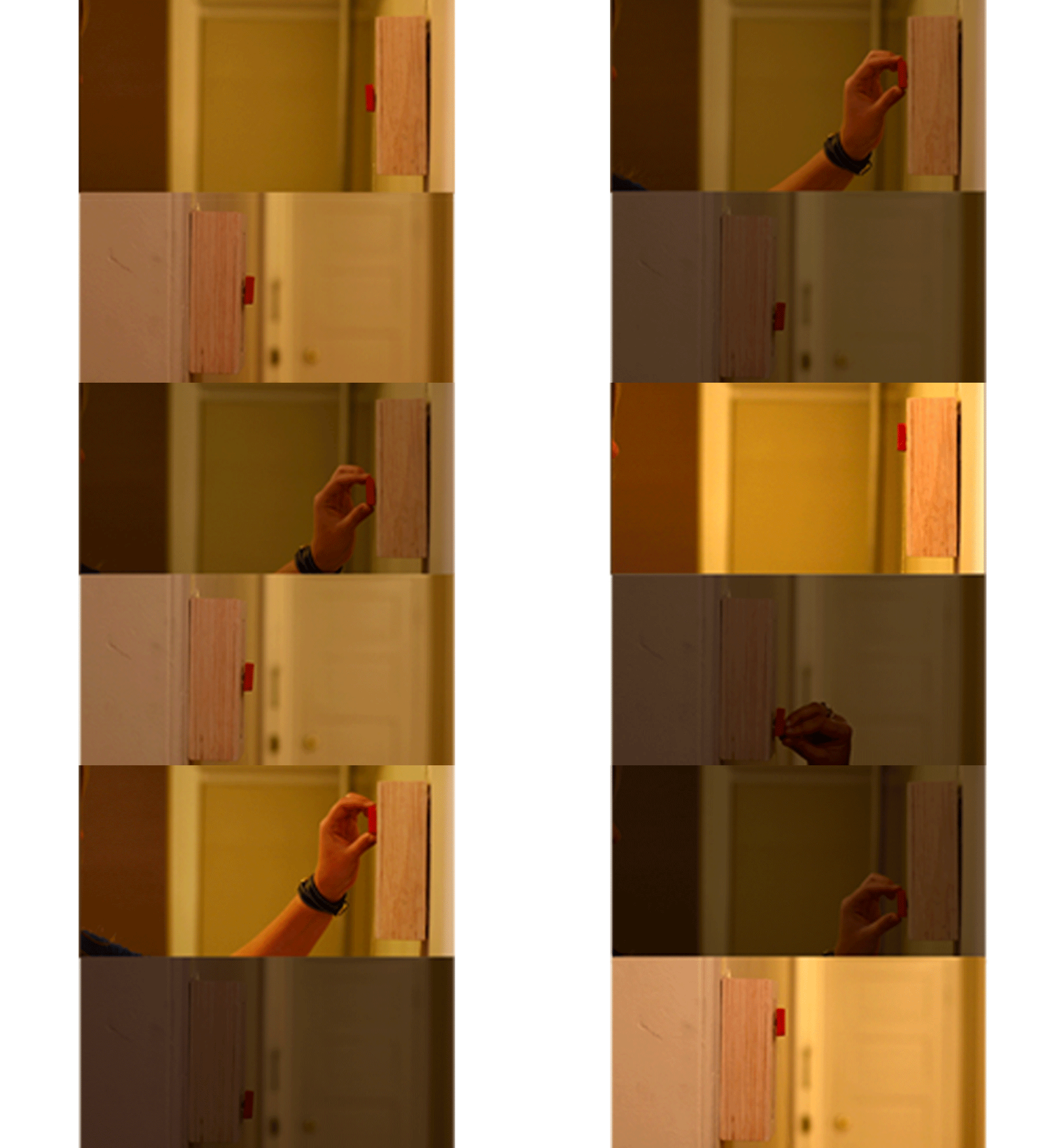
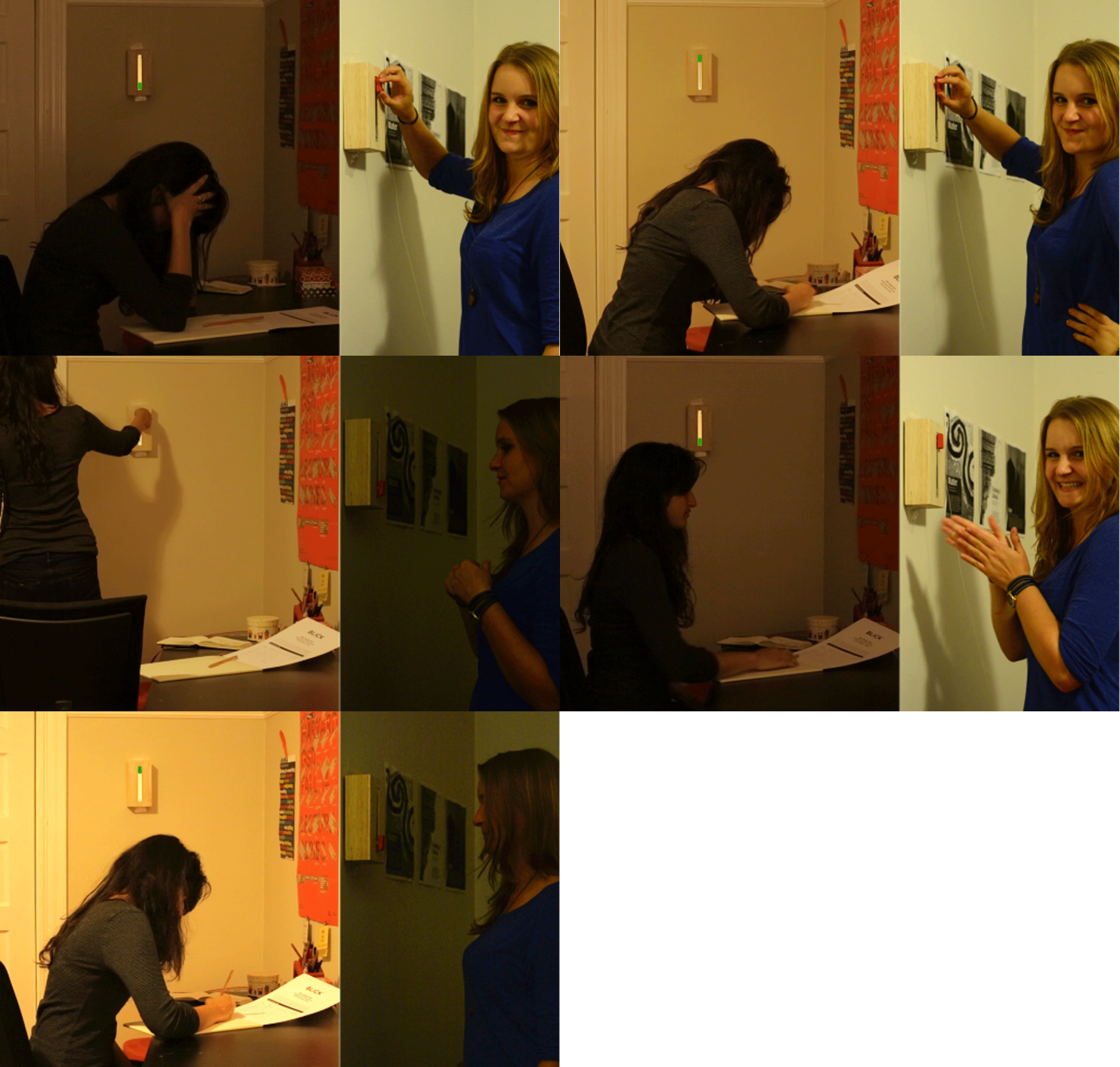
Whenever one of the two users of this interface push their light switch up, the switch of the other user goes down and vice versa. This creates a tangible form of smart energy grid.

It allows you and your friends/family to share the same amount of energy. If one of the participants is using energy the amount of energy available to the other will be limited. In context of LightShare the amount of light will be shared.

MULTI-SHARING:
During specific times of the day, the office can switch to LightShare mode, where individual units/cabins will be sharing their light with common areas. The number of people in the common areas will impact the amount of energy available for individual cabins. Eventually, encouraging people to work or sit together,l push people to work together or be more social.

Similarly, two friends sharing energy can encourage each other to be more conscious of energy use.

TANGIBLE:
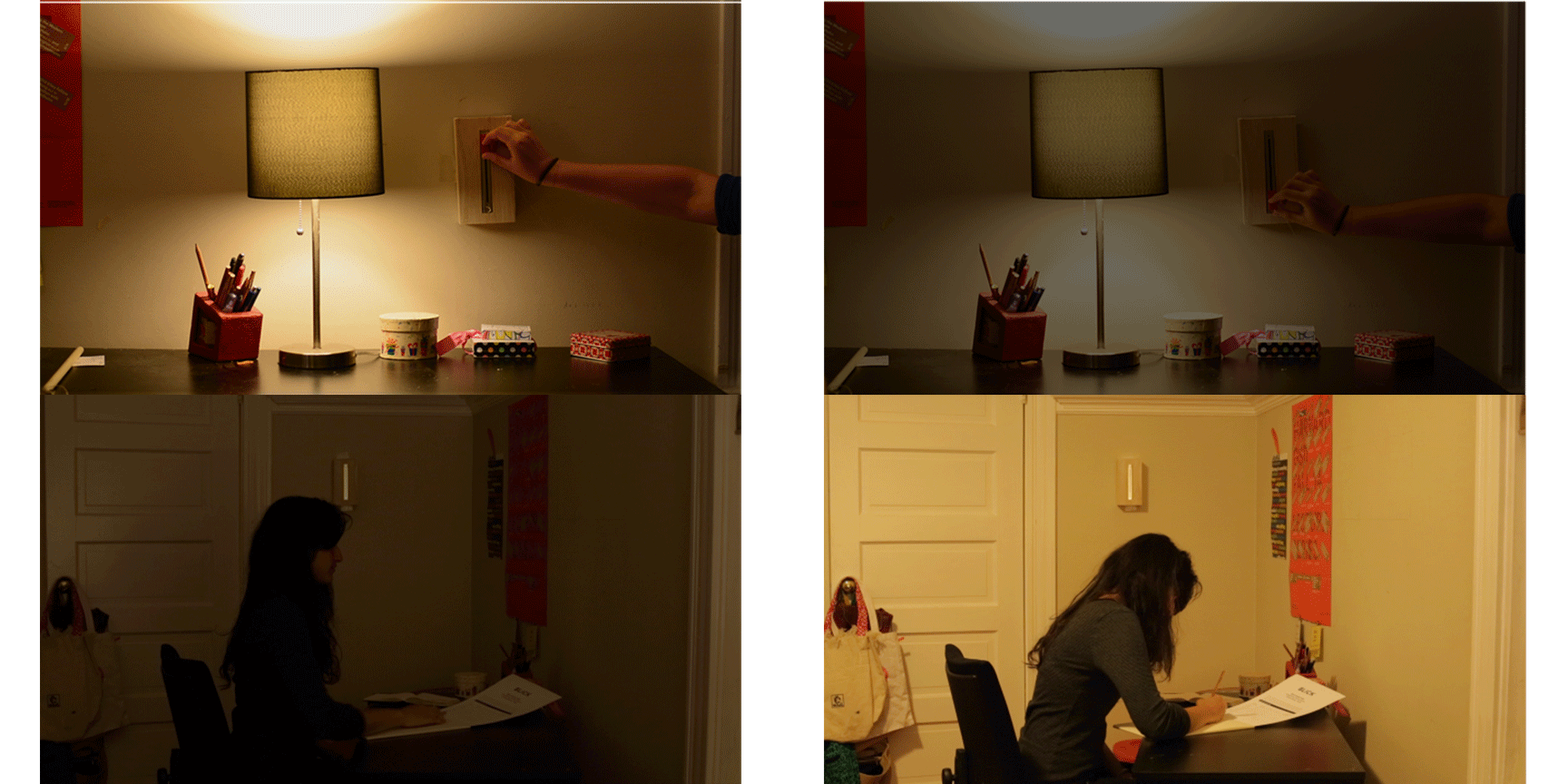
The haptic feedback component of the design lets the users know of the use of energy with their partners. When only when the switch is in use, there is no resistance and the switch slides easily. The switches are configured so that the total limit of how much they can be turned on is capped at the original limit of one switch. In other words, the switches share their positions in a reciprocal fashion. For example, when two switches are both in the middle, pushing one switch up will result in the other one being pulled down by the servo motor, which in turn causes the light controlled by that switch to be dimmed. Meanwhile, the user claiming brighter illumination will feel much larger physical resistance when pushing the switch up. Note that the reciprocal relationship only works in one direction, meaning that pulling down a switch in the middle will not push the other one up.
However, if the light in room B is turned on and the brightness is above half, the user in room A would feel strong haptic feedback on the switch. If the user continues pushing the switch, the other switch in room B would be pulled down by the system. In this scenario, LightShare acts like a smooth and tangible way of remote communication. Even though the user might not see the other users' activities, the haptic feedback indicates that the other party might need some light in there. For example, on a nice day when you are reading a book inside and your friend needs more light for intricate work, it might be kind to sit outside and yield the lighting to your friend.

PROBLEMS AND NEXT STEPS:
The main concern of LightShare is the resource bound it imposes and the social implication that follows. The current prototype sets a hard limit on the total amount of light used by the living space. This might cause arguments between roommates over who should have more illumination at the time. There are also reasonable occasions when such a hard limit would not be appropriate. For example, the user might want all lights in all rooms to be fully turned up during a house warming party. In the production version, we might consider implementing an overriding mechanism that allows, but strongly discourage users to turn up all switches. We decided to implement an Arduino based system because of its friendliness in development and easiness of extension. Compared to that of the light bulbs, the power consumed by the servo motors and the Arduino board is minuscule, thus our system does not add much energy overhead. We claim that LightShare is easily extensible and can be integrated with other energy saving mechanisms. Many current lighting solutions incorporate motion and light sensors for automatic dimming. LightShare can be added to such systems for better energy conservation.
bottom of page