PNEUFORM - Interacting with physical form through digital interface
MIT - Media Lab - Tangible Interfaces
In collaboration with Clark Della Silva, Yi Tong, Saurabh Mhatre & Juli Edtya Sikorska
The product was conceived and published for the 2015 British HCI Conference (British HCI '15). ACM, New York, NY, USA publication date Jul 16, 2015
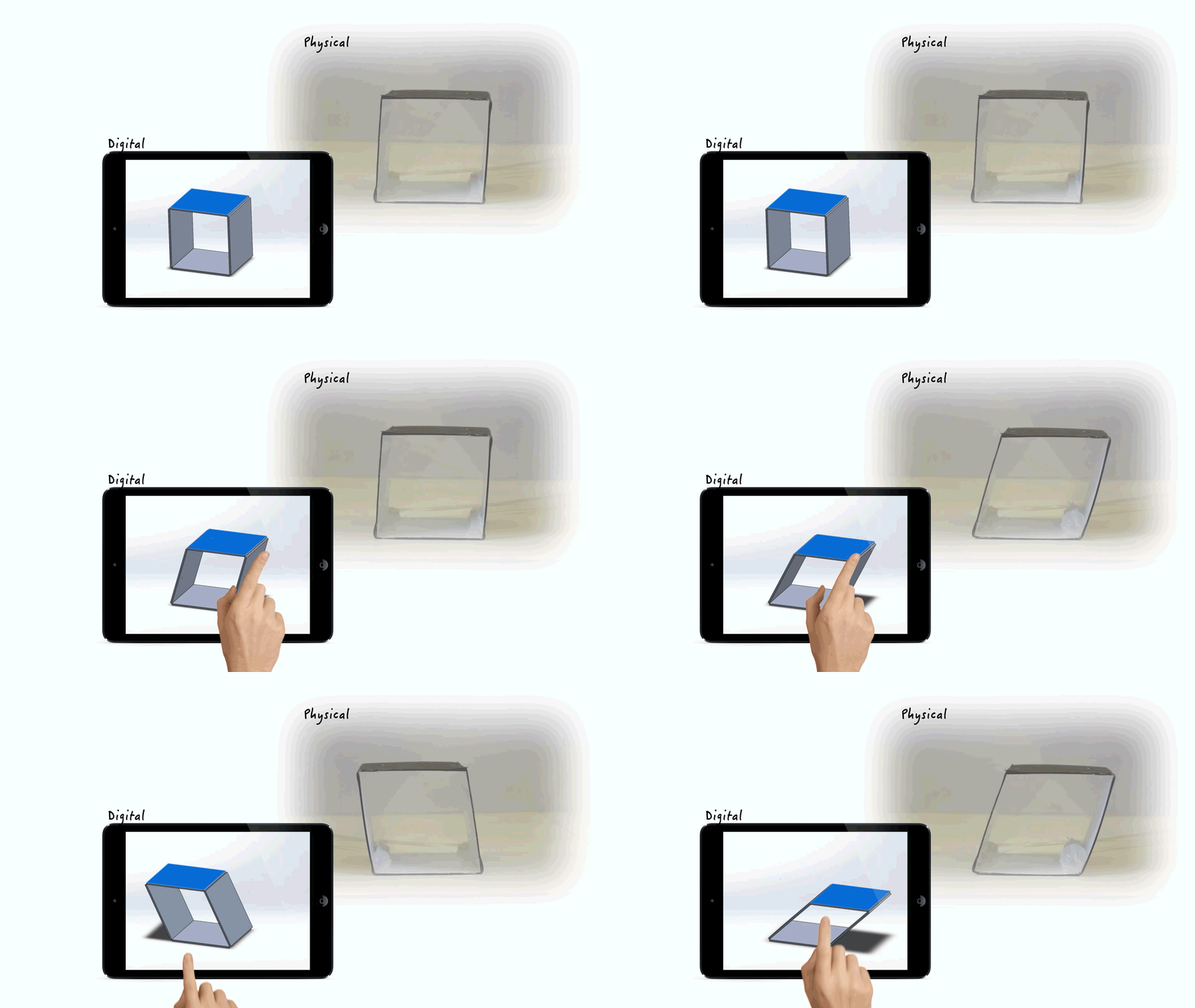
CONCEPT: PneuForm investigates a new method of interacting with the physical form. It is the missing link between a physical and a digital model, where data is transmitted from a TUI to a GUI through a 3D model in real time. It can be manipulated both ways: physical interaction with the tangible model changes the data in the 3D model, as shown PneuForm connects a physical, three-dimensional model and it’s digital representation on a graphical user interface. Through a flexible, high-resolution sensible and programmable material and modeling software, it allows a two-sided interaction between a tangible object and a precise digital model that can be modified from either side and is simultaneously represented in its counterpart.by the GUI, and changing parameters in the graphical user interface affects the physical model as it moves and changes it shape, and can thus be programmed to perform certain actions.
MY ROLE:
Worked on concept development, material exploration and fabrication of the prototype with the team, production, and editing of the video using Adobe After Effects and other presentation material using Illustrator and Photoshop.
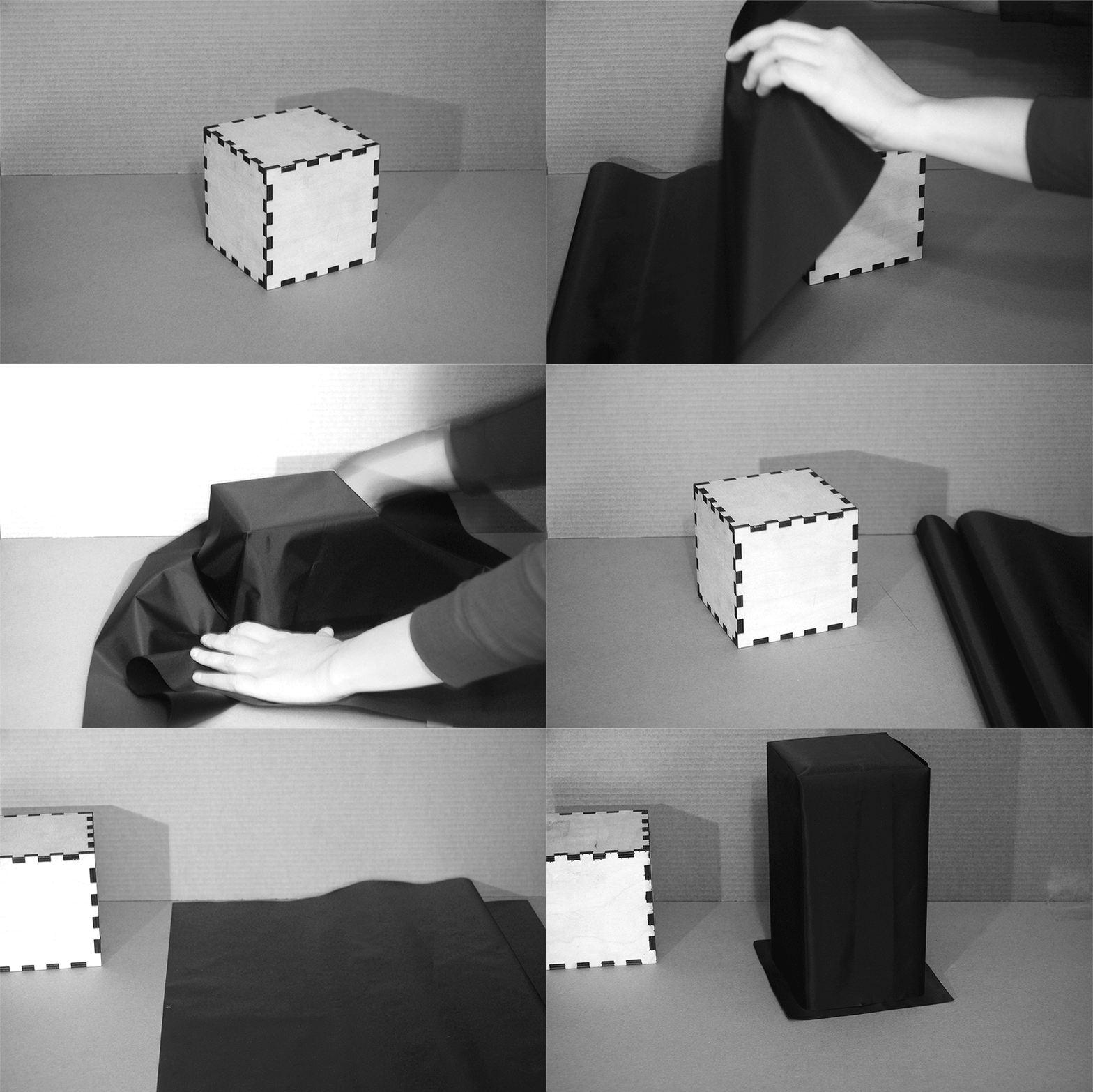


Introduction: Even though new forms of tangible interaction and shape are constantly being developed, there is yet no way of rapid 3D prototyping that can reflects the idea as it is being developed. Currently, there are two methods. The first are two-dimensional sketches and paper prototyping, which are quick but do not convey the complexity of a tangible interaction and need to be made new at each iteration. The second are three-dimensional rapid prototyping techniques such as additive manufacturing and laser cutting, but unlike the name would suggest, they are not as rapid as the ideation process itself. In addition, once they have been created and need to be iterated, the digital model is changed and the part is reprinted, and the old version is discarded.
Until now, there is no prototyping platform that can change its shape in space as you think and speak, and grow with the idea as it develops. Having the opportunity do alter a prototype or even program it as you go would provide a much higher creative freedom. Ideally, any shape can be created or replicated from an existing object, and as the idea develops it can be changed according to the desired properties or external factors, and it is reflected in a digital representation in the form of a 3D model right away. In reverse, it should be possible to start with a digital model that is represented in a physical form, and as parameters on the 3D models are changed, the tangible prototype adapts and changes its shape or texture.
PneuForm connects a physical, three-dimensional model and it’s digital representation on a graphical user interface. Through a flexible, high-resolution sensible and programmable material and modelling software, it allows a two-sided interaction between a tangible object and a precise digital model that can be modified from either side and is simultaneously represented in its counterpart.

The Folding Fabric: The folding fabric consists of 6 pieces of laser cut plastic squares connected with 5 flex sensors (Figure x). All the flex sensors is connected in series by a wire going through the connect on the same side and then linked to the 5V linear regulator. The remaining connectors on each sensor are connected to 5 different analog inputs, A0,A1,A2,A3,A4 respectively and then connected to the ground in parallel with a 9.1k resistor in between, which serves as a voltage divider. The plastic board is glued and sealed in between two piece of black fabric. SO the folding fabric has 6 pixels. When the fabric is fold, the flex sensor between the boards will sense a ben. The flex sensor then changes its resistance when flexed and that change is measured using the corresponding analog pin on the Arduino.The analog pin serves as a voltage meter where at 5V (its max) it would read 1023, and at 0v it read 0.


Actuation: Pneumatic Silicone Actuators allow the transformation of the fabric just by its inherent material properties. The actuation is based on the fact is that when air is pumped and pressure is applied within the silicone channel the force acts on the largest surface. This causes the actuators to bulge along their longitudinal axis hence causing the fabric pixel to deform. When the air flow is stopped the actuator returns to its original position due to the restoring force of the silicone. Using the above principle a variety of hinges could be designed which have a direct co-relation between the amounts of pressure to the change in angle. By varying the pressures applied to the 2 pneumatic actuators the angle of the case can be changed. The same is also valid for changing the configuration of flat sheets into 3d objects.


Future Work
The goal of our research was to develop a method to seamlessly weave the physical and virtual world together. Currently we split the solution into two parts. The first part shows how we can get a digital model of an object by wrapping a smart fabric around it. The second part shows how a physical and virtual model can be linked, and changes to one model are reflected in the other. The main goal for future work is the integration of the smart cloth with pneumatic actuators into a single sheet, and we feel there are two research directions that benefit this goal. The first direction is working towards a better model capture system by developing a higher resolution smart cloth. This would allow models to be captured in higher detail, and the use of a cloth would allow for range of motion of an object to also be captured. The second is the design of miniaturized pneumatic actuators that are bidirectional and more robust. This would allow for the actuators to be embedded directly into the cloth, creating a unified system that can both measure and replicate
Conclusion
We demonstrated PneuForm, a new method for interacting with physical form through dynamic replication. We investigate how a dynamic connection between physical and virtual models can be formed by using a pneumatic smart cloth to capture and replicate an existing form. Once the form is replicated, PneuForm enables bidirectional interaction with the object by linking physical and virtual changes to the replicated form. As a proof of concept we developed two prototypes that explore how cloth can be used to capture the form of an object, and how pneumatic actuators can be used to drive the link between a virtual model and a physical object. Linking a physical and virtual model creates the possibility for interactions occurring simultaneously between the physical and virtual models. However, there are several challenges that need to be addressed before this system is to be fully realized. Our research acts as first step towards understanding how physical and virtual models can be dynamically linked, and in future work we want to explore how interacting with a joint model changes our understanding of an object.